

Control Strategy for Cold Weather Operation
December 2, 2025

Establishing cooling through evaporation of water is a very common practice and the most effective method considering the available footprint and the initial investment. For some colder regions however this type of cooling comes with its own set of challenges. At certain ambient conditions the recirculating water will inevitably become too cold and may start to turn into ice.
Through years of experience EVAPCO has established some basic guidelines which will allow you to operate your evaporative cooling equipment in a safe and secure manner.
1.When feasible go for a closed circuit solution
EVAPCO provides a wide portfolio of closed circuit coolers, ranging from 100% evaporative, full hybrid solutions, adiabatic and dry coolers. This type of cooling offers the advantage that – if properly selected – it can run dry in cold conditions. The recirculating water can be drained from the sump eliminating the risk of ice formation but also reducing the total cost of water usage and water treatment. The cooling fluid in the primary circuit will need to contain an appropriate percentage of glycol to prevent the coil from freezing.
When the evaporative cooling unit is going to be used in wet mode during cold weather conditions, several topics need to be considered including unit layout, recirculating water, unit piping, unit accessories and capacity control of the units.
2.Unit Lay-out
Adequate unobstructed air flow must be provided for both the intake and discharge from the unit. It is imperative that the lay-out minimizes the risk of recirculation. Recirculation can result in condensation freezing the inlet louvers, fans and fan screens. The buildup of ice on these areas can adversely affect air flow and in more severe cases, lead to failure of these components. Prevailing winds can create icing conditions on the inlet louvers and fan screens adversely affecting airflow to the unit.
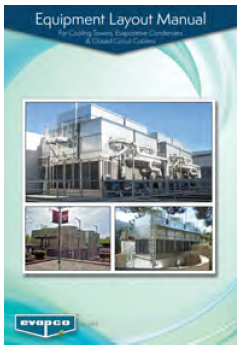
For additional information on unit layout, please refer to EVAPCO’s “Equipment Layout Manual”.
3.Freeze Protection of Recirculating Water
Basin heaters are available to keep the recirculating water from freezing when the water is turned off. However, the basin heater will not prevent the external water lines, pump or pump piping from freezing. The make-up water supply, overflow and drain lines must be heat traced and insulated to protect them from damage. Any other connections or accessories at or below the water level must also be heat traced and insulated.
4.Unit Piping
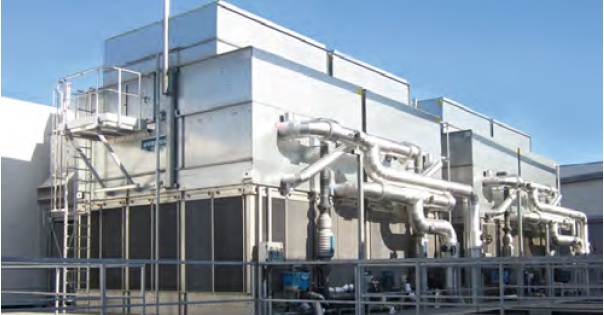
The use of a bypass should also be considered. Typically, winter loads are less than peak summer loads. When this is the case, a cooling tower bypass needs to be incorporated into the system design to allow water to “bypass” the tower’s water distribution system as a means of capacity control. Never use a partial bypass during cold weather operation. Reduced water flow can result in uneven water flow over the heat transfer media (fill), which can cause ice formation.
5.Unit Accessories
In addition to Cold Water Basin Heaters the following accessories are recommended to ensure that the cooling tower will function properly during cold weather operation.
Electric Water Level Control
Optional electric water level control packages can be furnished to replace the standard mechanical float and valve assembly eliminating the freezing problems experienced by the mechanical float.
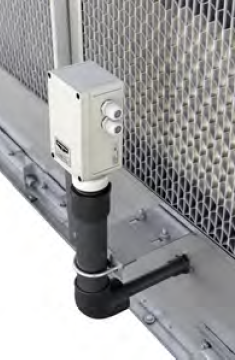
▲Electric Water Level Control
Vibration Cut Out Switches
During cold weather conditions, ice can form on the fans of cooling towers causing excessive vibration. The optional vibration switch shuts the fan off avoiding potential damage to or failure of the drive system.
Space Heaters
For units subject to freezing climates, high humidity climates, or idle periods lasting 24 hours or more, motor space heaters should be energized to drive any moisture condensation out of the motor windings.
6.Capacity Control Methods for Cold Weather Operation
When the ambient temperatures are below freezing, additional precautions must be taken to avoid the potential for damaging ice formation or equipment damage.
It is very important to maintain close control of the cooling tower during winter operation. EVAPCO recommends that an absolute MINIMUM leaving water temperature of 6°C must be maintained; obviously, the higher the water temperature from the tower, the lower the potential for ice formation. This assumes that proper water flow over the tower is maintained.
The most common method of capacity control during cold weather operation is the use of a variable frequency drive (VFD). This allows the closest control of the leaving water temperature by allowing the fan(s) to run at the appropriate speed to closely match the process load. As the load decreases, the VFD control system may operate for long periods of time at reduced fan speeds. Operating a low leaving water temperature and low air velocity through the unit can cause ice to form. It is recommended that the minimum speed of the VFD be set at 50 percent of full speed to minimize the potential for ice to form in the unit.
7.Ice Management
When operating an evaporative cooling unit in extreme ambient conditions, the formation of ice is inevitable. The key to successful operation is to control or manage the amount of ice that builds up in the unit. If extreme icing occurs, it can lead to severe operational difficulties as well as potentially damaging the unit. Following these guidelines will minimize the amount of ice that forms in the unit leading to better operation during the cold weather season.
In severe climates, the incorporation of a defrost cycle can be used to manage the formation of ice in the unit. During the defrost cycle, the fans are reversed at half speed while the system pump flows water through the unit’s water distribution system.
Operating the unit in reverse will melt any ice that has formed in the unit or on the air intake louvers. Please note that the fans may need to be cycled off prior to a defrost cycle or the water has to pass through the bypass to allow the water temperature to rise.
The frequency and length of the defrost cycle is dependent on the control methods and ambient cold weather conditions. Some applications will build ice quicker than others which may require longer and more frequent defrost periods. Frequent inspection of the unit will help “fine tune” the length and frequency of the defrost cycle.
Operating evaporative cooling equipment in cold weather conditions comes with its own set of challenges. EVAPCO has ample experience in such applications and can provide expert guidance to assist you. Don’t leave your equipment out in the cold!